How to Explain Minimally Invasive Spine Surgery to Patients Online
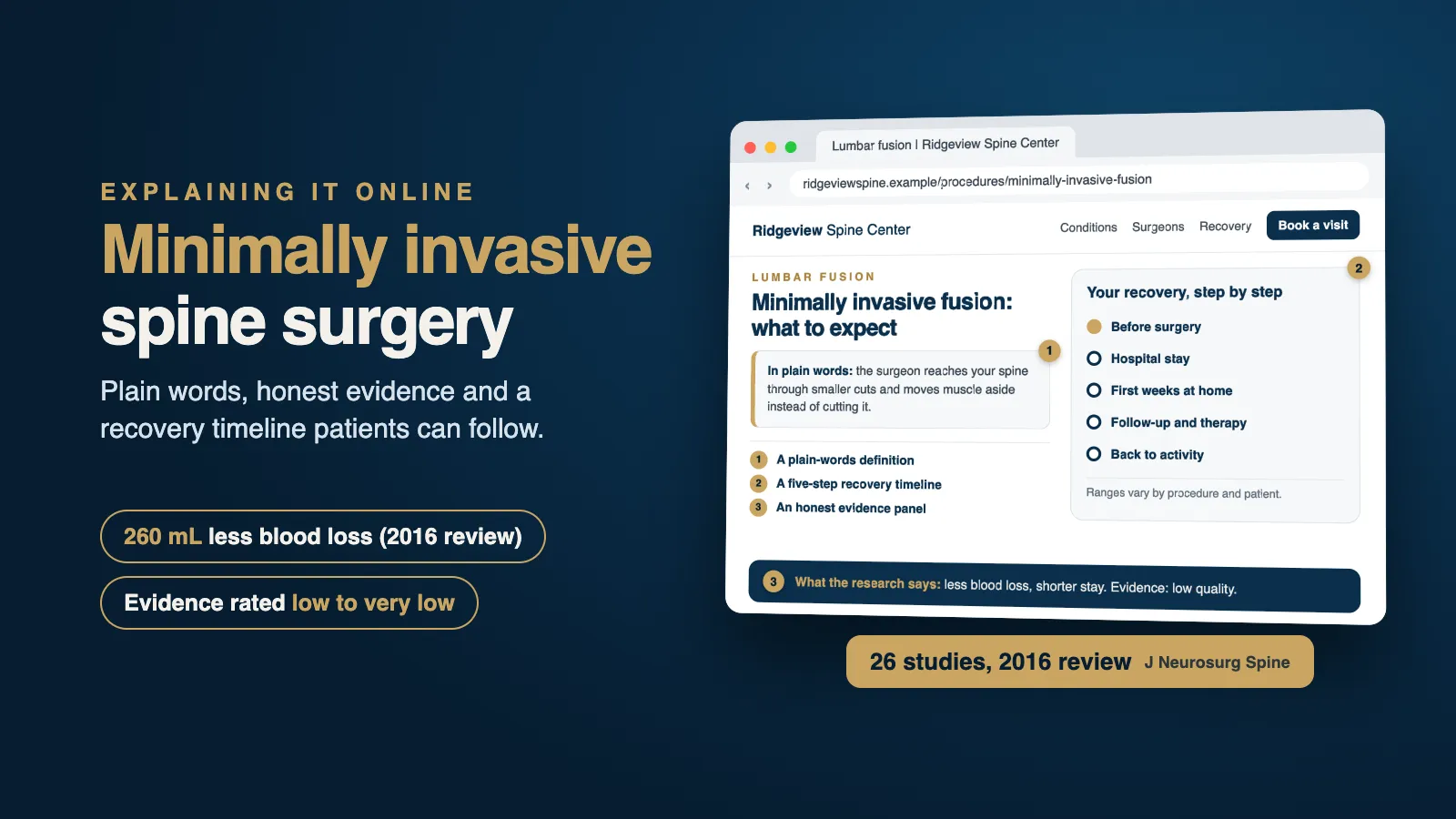
Patients search for minimally invasive spine surgery before they ever call. Seven ways to explain it clearly, accurately and in plain words on your website.
Read the guide →Straight answers on marketing, budgets and patient growth, written for surgeons and practice managers.
Patients search for minimally invasive spine surgery before they ever call. Seven ways to explain it clearly, accurately and in plain words on your website.
Read the guide →The numbers that shape how patients find and book a surgeon in the US and Canada, from AI search and reviews to ad costs and wait times. Every figure links to its source.
Injured athletes book fast and pick the practice that can see them this week. Seven practical ideas to win sports medicine patients in the US and Canada.
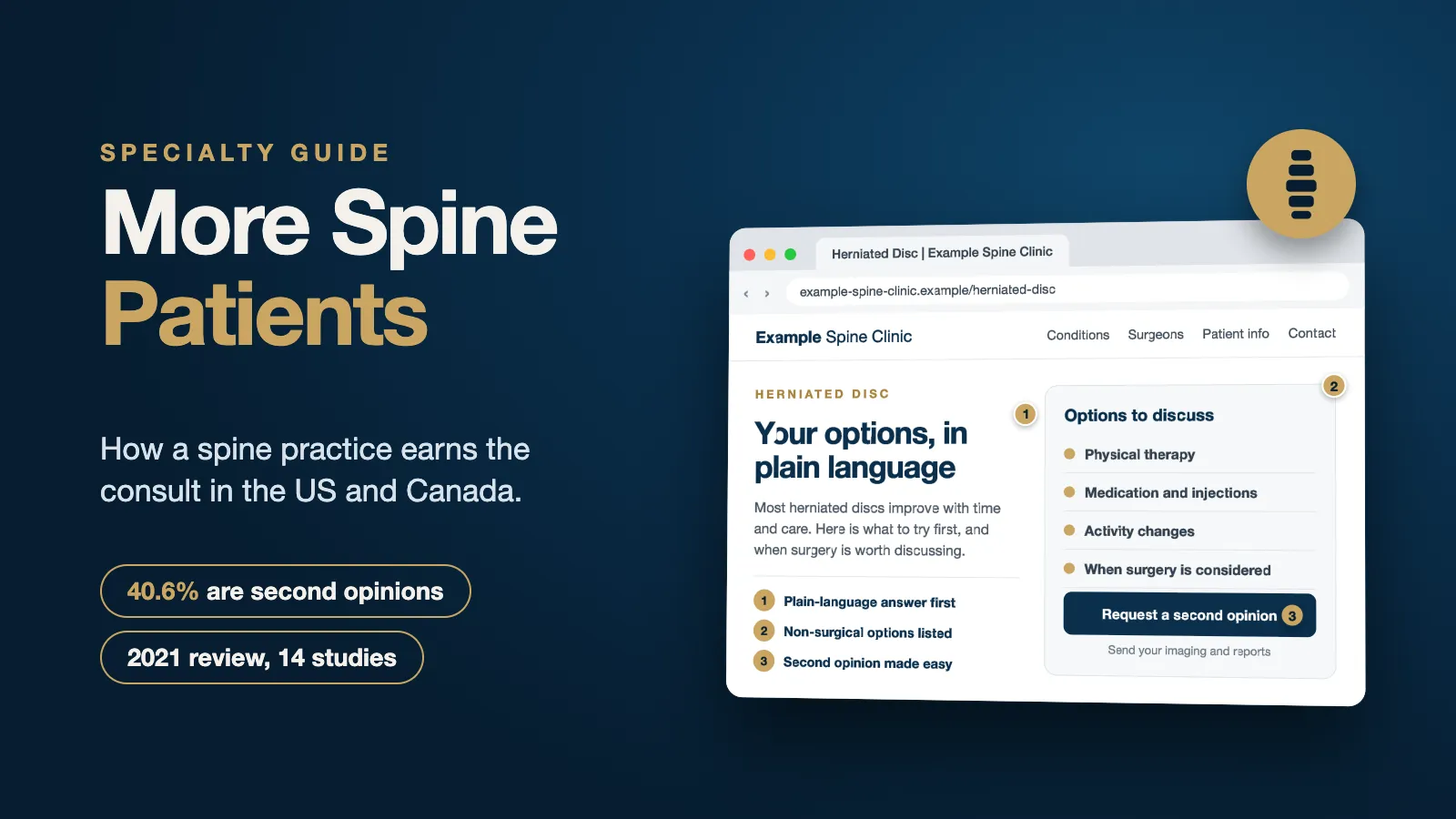
Spine patients rarely book fast. Here is how to get found, earn trust and win the consult, with the US and Canada differences spelled out.
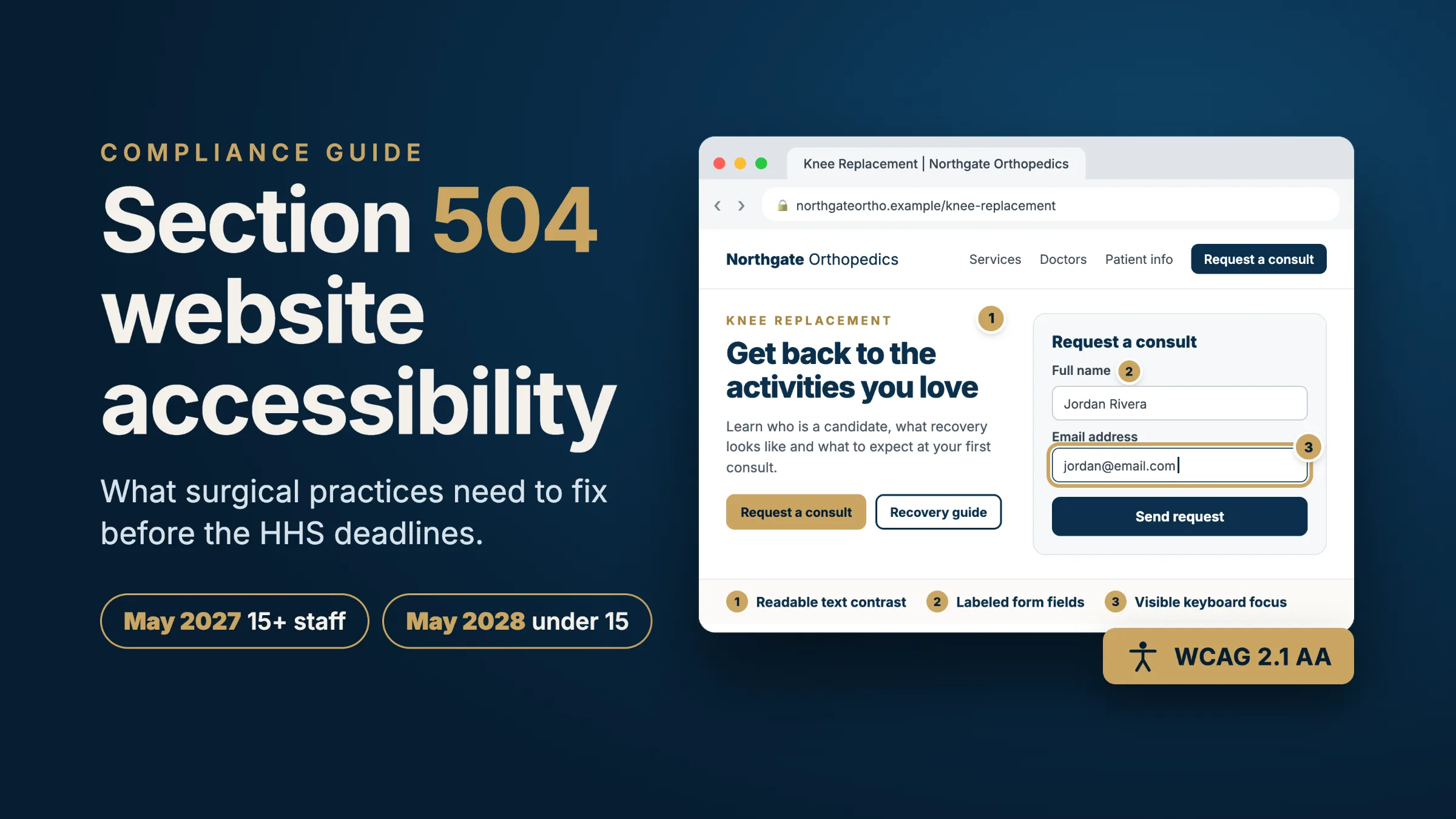
A federal rule under Section 504 requires many healthcare practices to make their websites and apps accessible. The deadlines moved to May 11, 2027 and May 10, 2028. Here is who is covered and what to fix first.
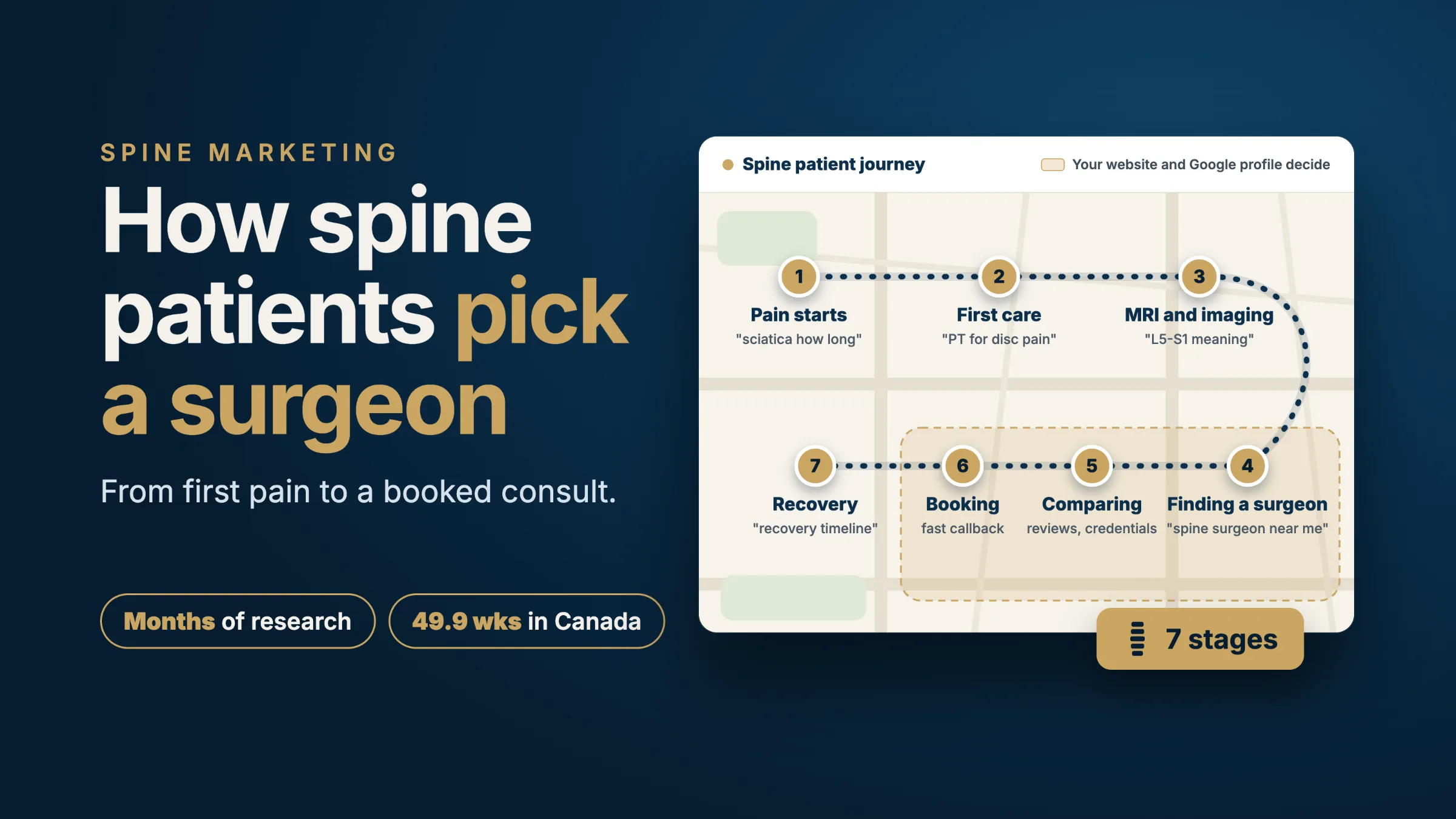
Spine patients take months to reach a surgeon, and most of that time they are searching, comparing and asking other clinicians. Here is the journey stage by stage and what your practice needs at each one.
Each province sets its own advertising rules for physicians, and cosmetic surgery is where practices get caught. Here is what Ontario, British Columbia and Alberta allow, side by side.
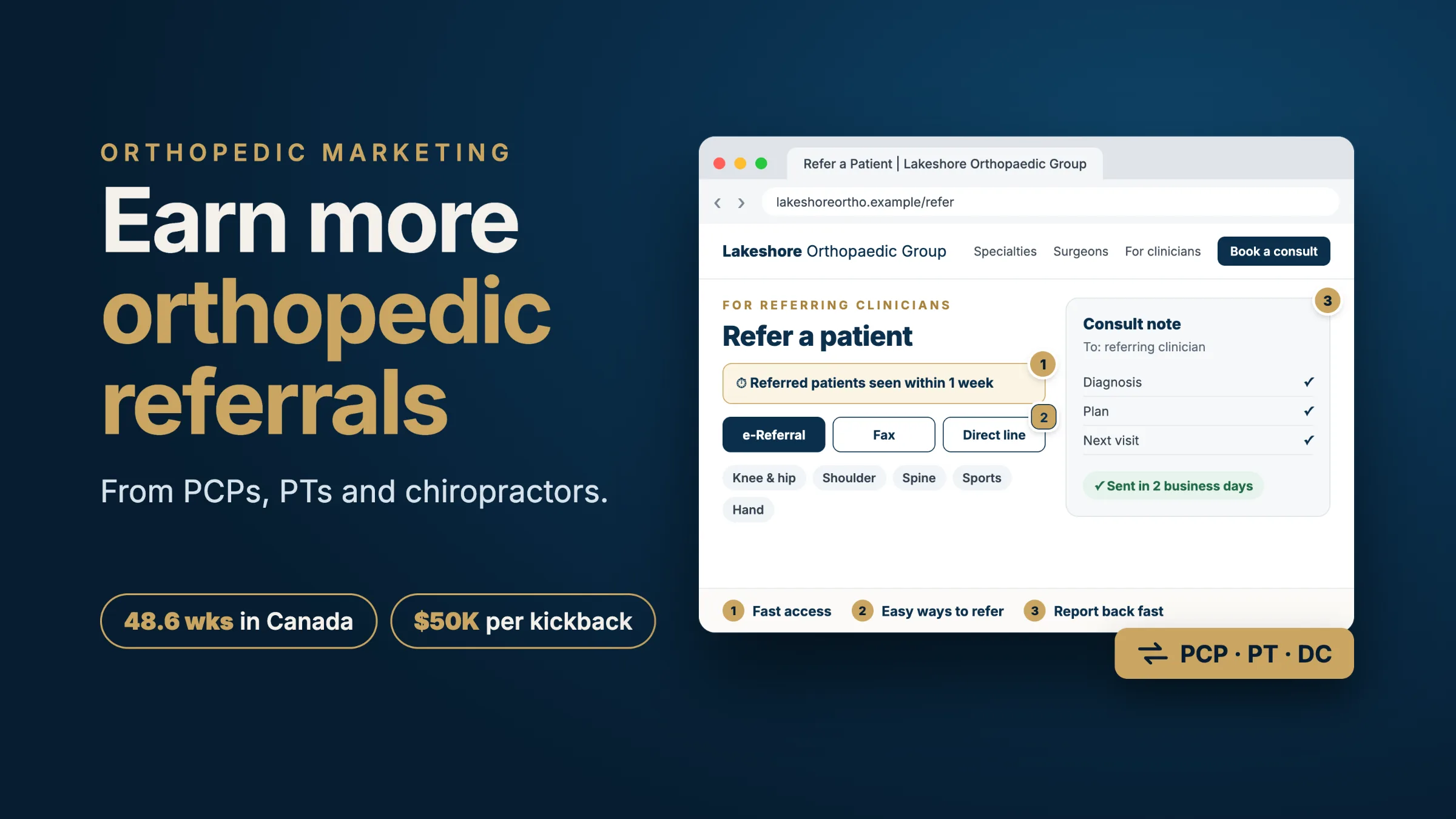
Most orthopedic patients arrive with someone else's recommendation. Here is how to become the practice primary care doctors, physical therapists and chiropractors trust, without breaking referral rules.
Instagram is where patients vet a plastic surgeon, but it limits how far cosmetic surgery content travels. Here is what to post, what to avoid and how to turn followers into booked consults.
Joint replacement patients research for months and often bring family into the decision. Here is how orthopedic practices win that research phase and the referrals around it.
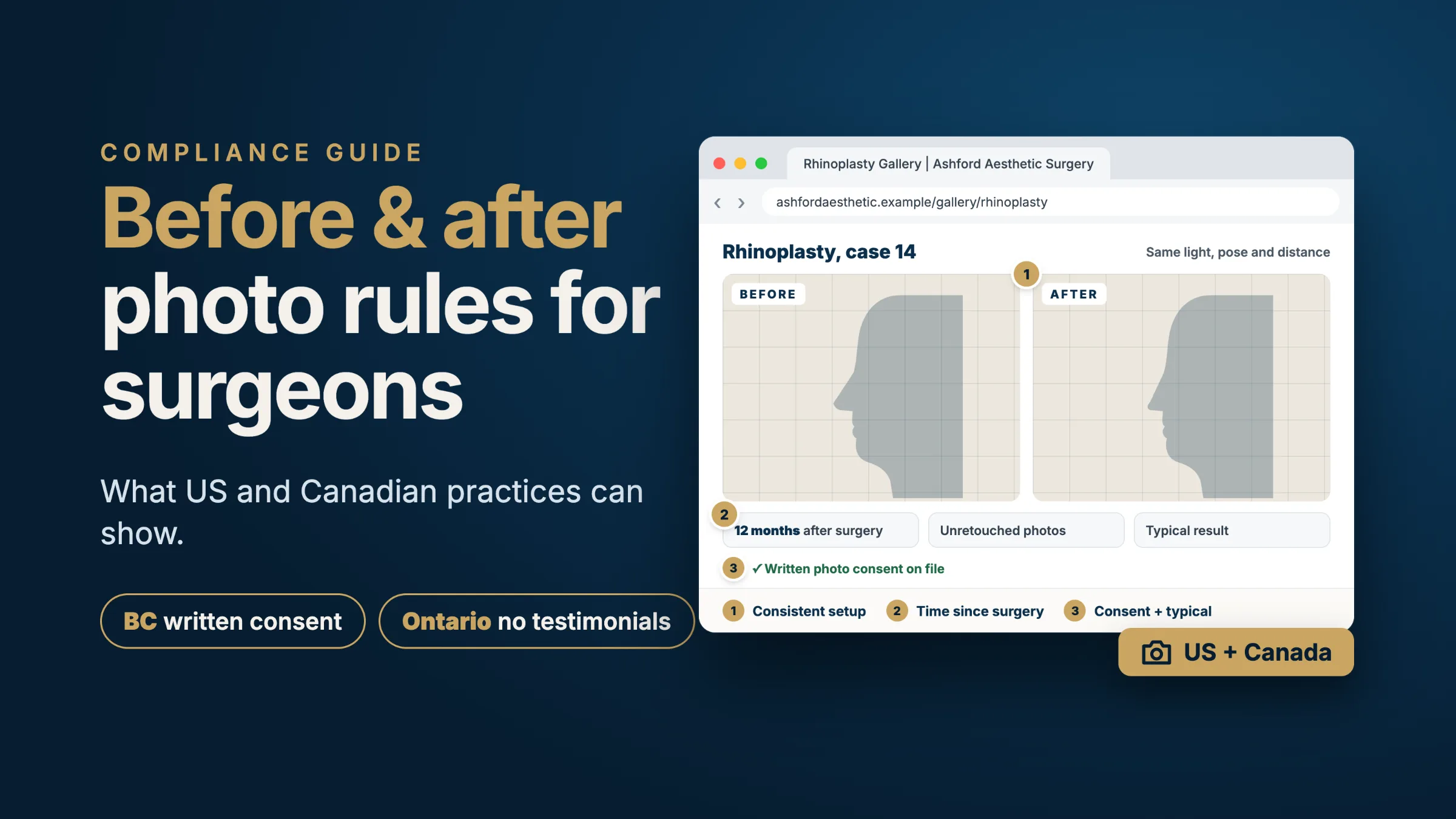
Before-and-after photos sell more surgery than any other content, and cause more compliance trouble. Here are the US and Canadian rules for websites and ads, plus a practical shooting and consent checklist.
Most agencies say they work in healthcare. These 15 questions show which ones understand surgical patients, medical ad rules and who should own your accounts.
You don't need "near me" on your website. You need the right profile structure, the right category, a page per procedure and a steady flow of real reviews.
More reviews come from asking every patient the same way at the right moment. Here are the timing, scripts and rules surgical practices need to do it safely.
Cosmetic patients shop for weeks before they call. Here is how plastic surgeons win that research phase online without breaking advertising rules.
Your real competitor is often a package deal abroad. Here are hair transplant marketing ideas that win on trust, transparency and who actually does the surgery.
LASIK marketing lives or dies on price honesty and candidacy. Here is a practical playbook for refractive practices that want more booked evaluations.
Bariatric case volume has dropped as GLP-1 use has surged. Here is how metabolic and bariatric programs can market honestly and fill their seminar and consult calendars.
Self-pay surgical patients buy on clarity. Here is how to price, explain financing, meet good faith estimate rules and market private-pay surgery in the US and Canada.
Most "missing from Maps" problems come down to seven causes. Work through this checklist in order and you'll usually find yours in under an hour.
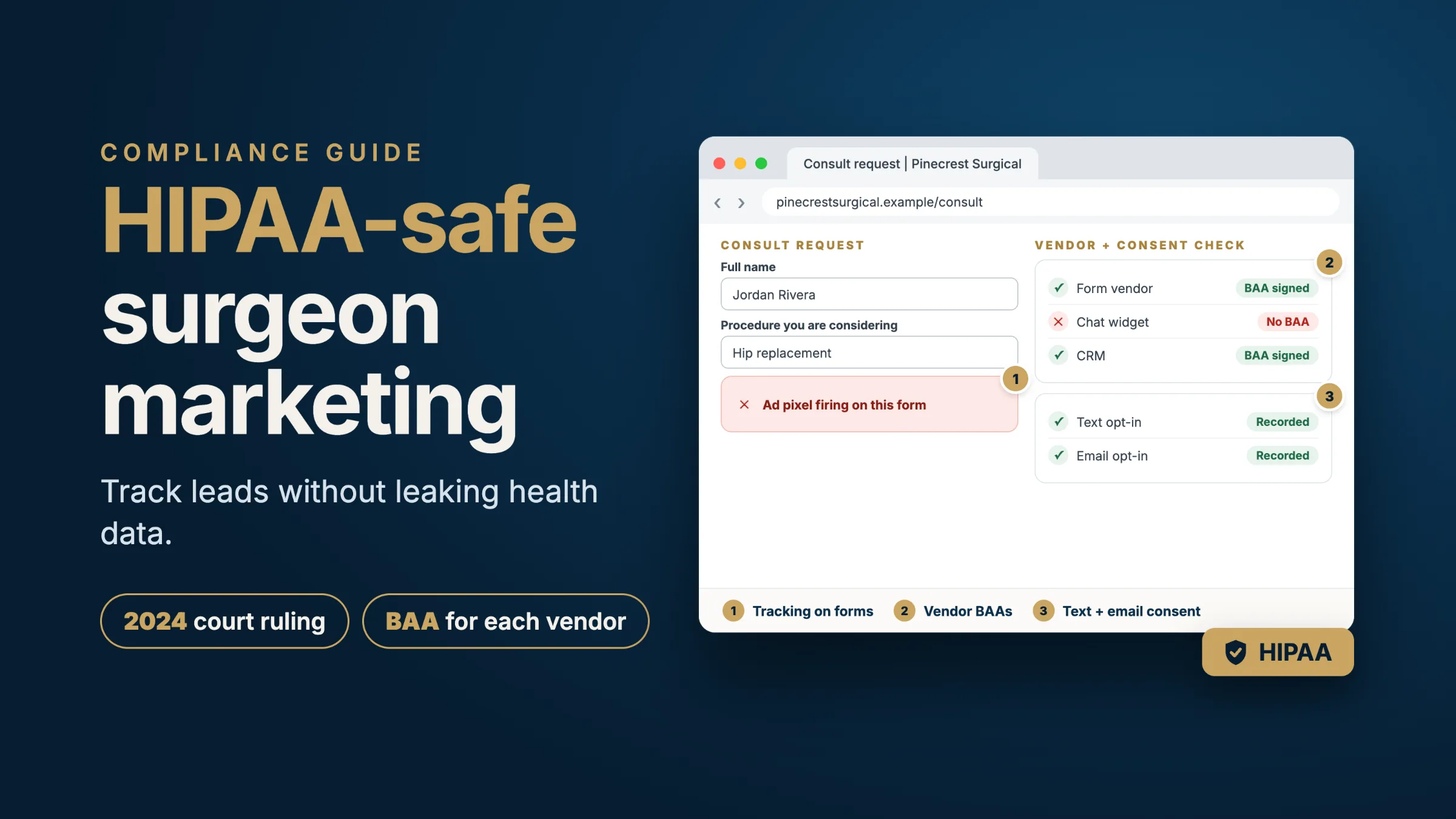
What surgical practices can and can't do with patient data in ads, tracking, email, texts and testimonials, on both sides of the border.
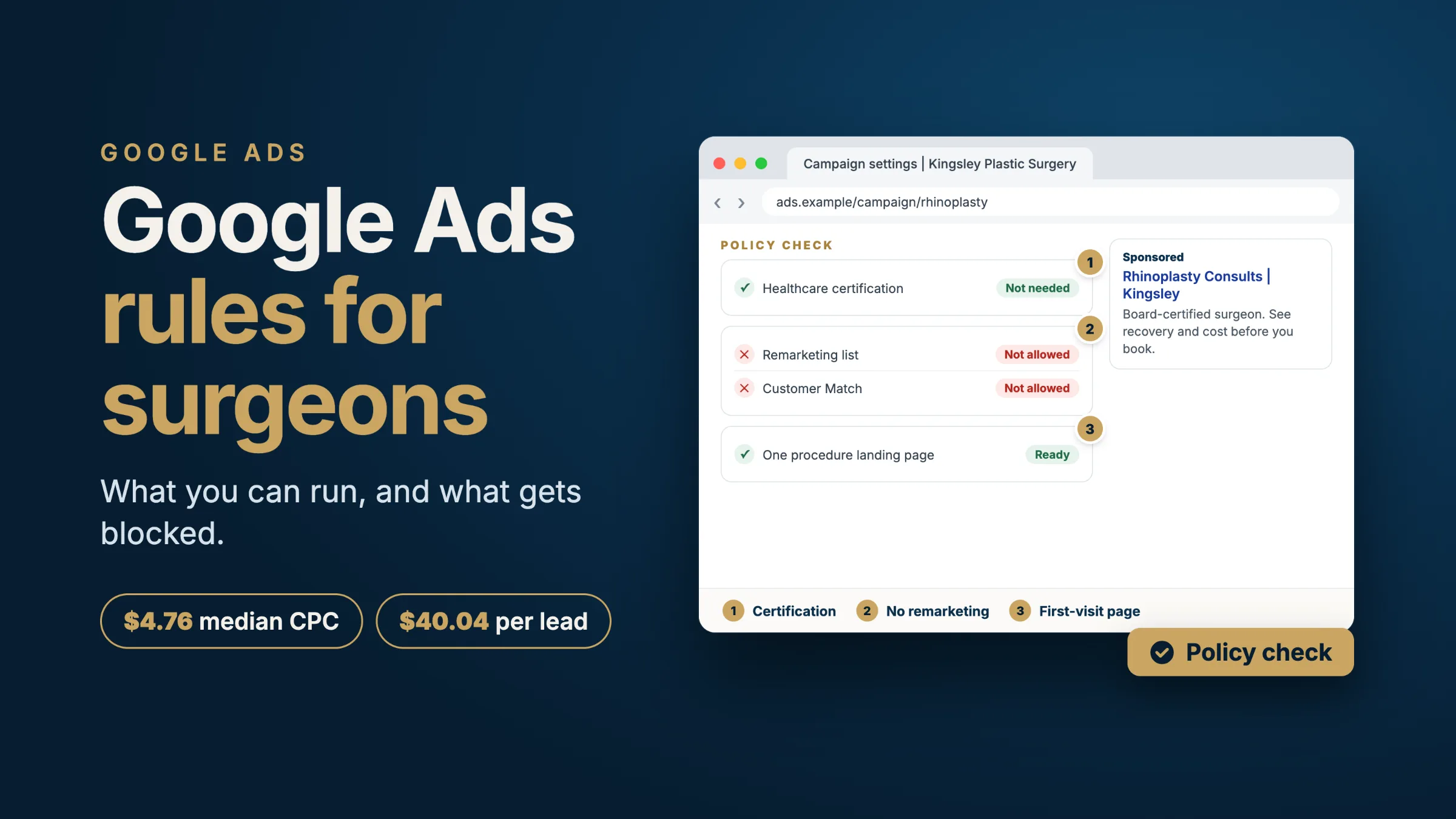
Most surgical practices never need LegitScript. What trips them up is targeting, drug terms and imagery. Here is what Google allows in the US and Canada.
You've seen 2.4%, 6.6% and 12.43% all called "average." They measure different things. Here is which number applies to you, and the one that actually matters.
Most surgical websites look fine and still leak patients. These are the mistakes we see most, why they cost consultations, and how to fix each one.
A procedure page has to rank, reassure and convert, all while being medically accurate. Here is the outline we use and the review step that keeps it safe.
AI answers are built from sources the engines can find and trust. Here is how each one picks them, what surgeons can actually influence, and how to test it.
Your Business Profile is often a patient's first look at your practice. Here is how to set up every field the right way, and what surgeons commonly get wrong.
No-shows waste your best marketing dollars. Here is what the research says works: fast booking, reminders, fair deposits and a waitlist that backfills cancellations.
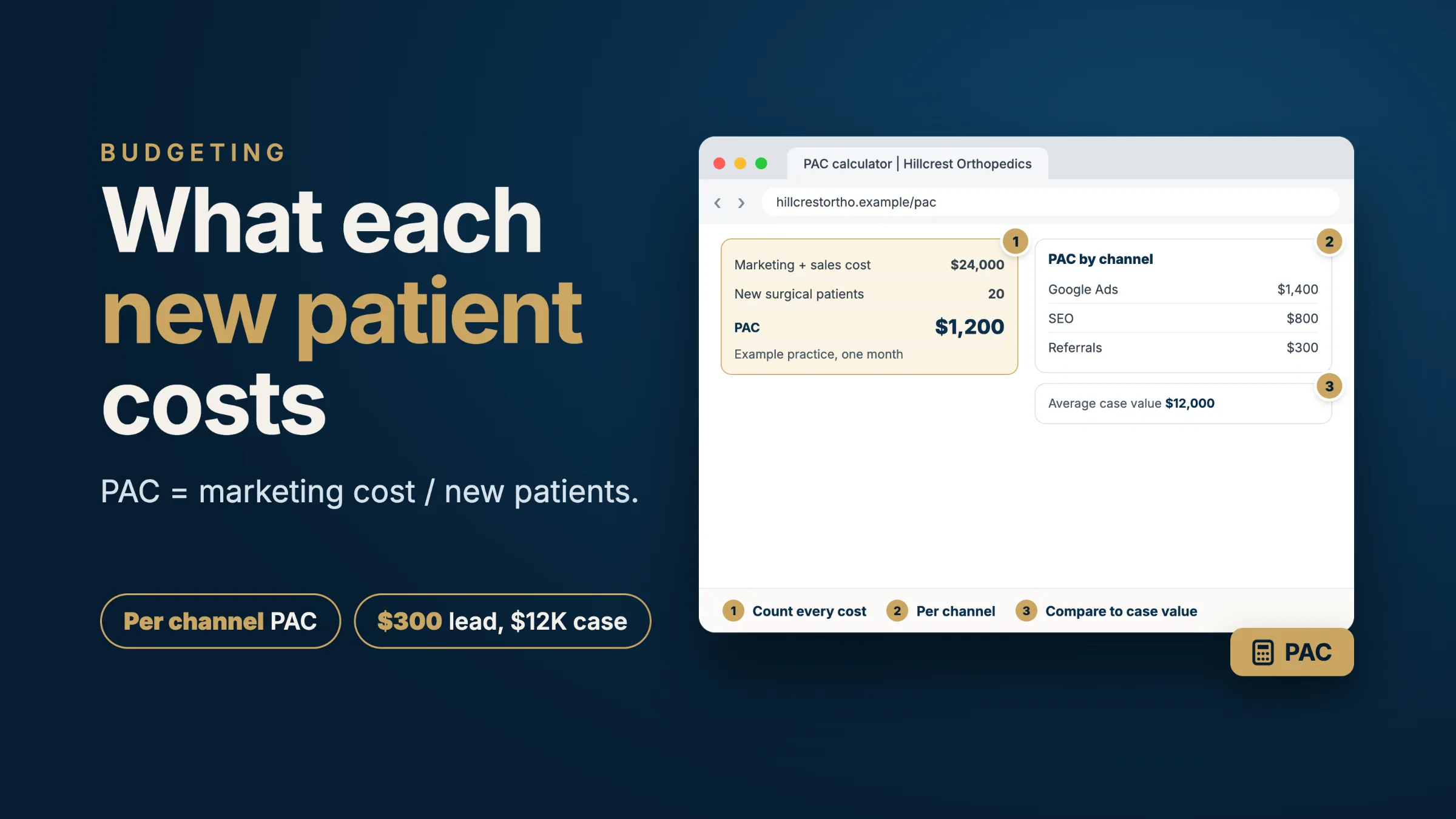
Cost per lead is the number agencies love to report. Cost per surgery is the one that pays your bills. Here is how to calculate it, with a worked example.
Local SEO, a strong website, Google Ads, reviews, referrals and more. The nine channels that bring surgical practices new patients, and how fast each one works.
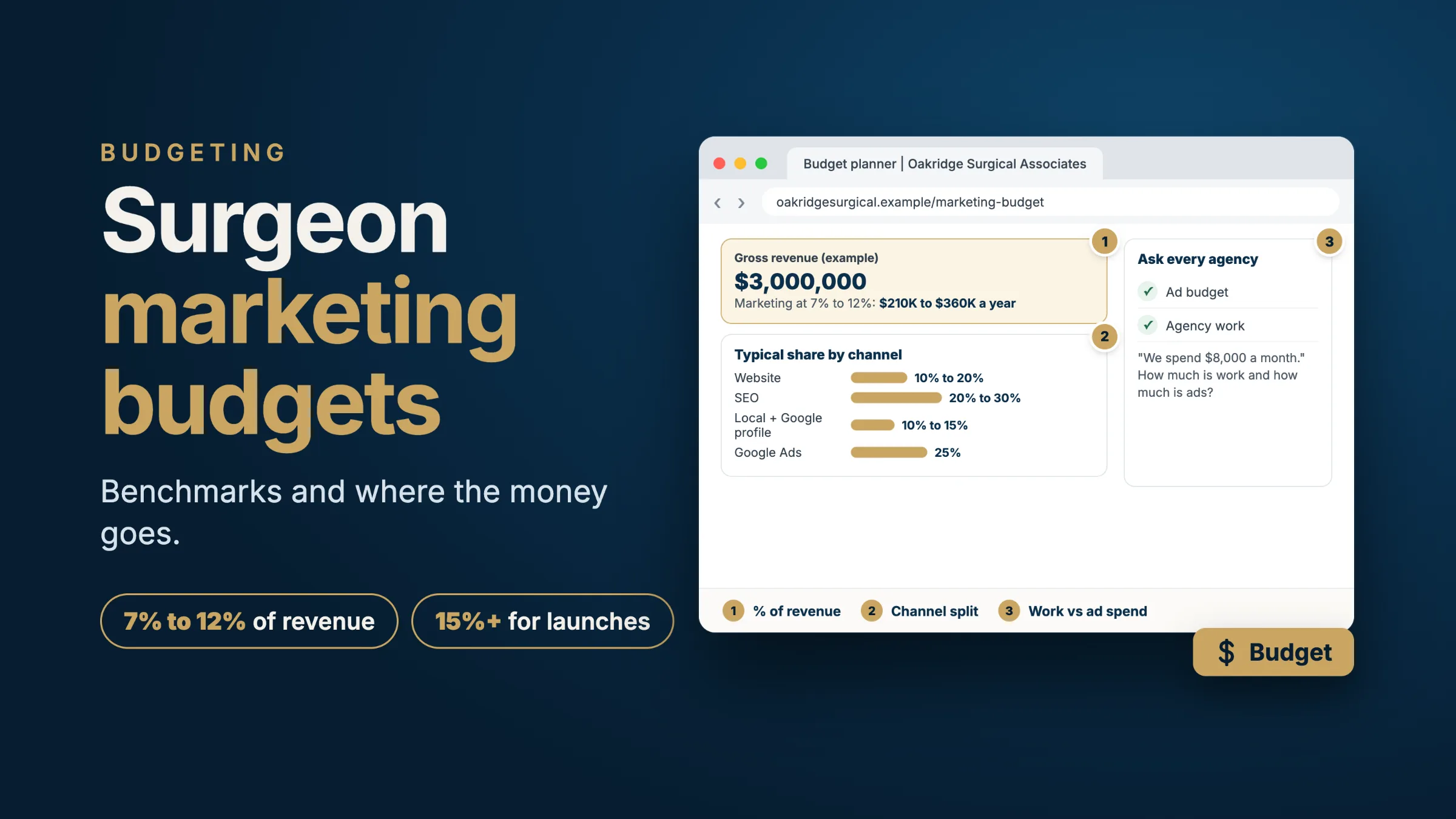
Most surgical practices spend about 7% to 12% of revenue on marketing. Benchmarks by practice type, where the money goes, and how to set your own budget.
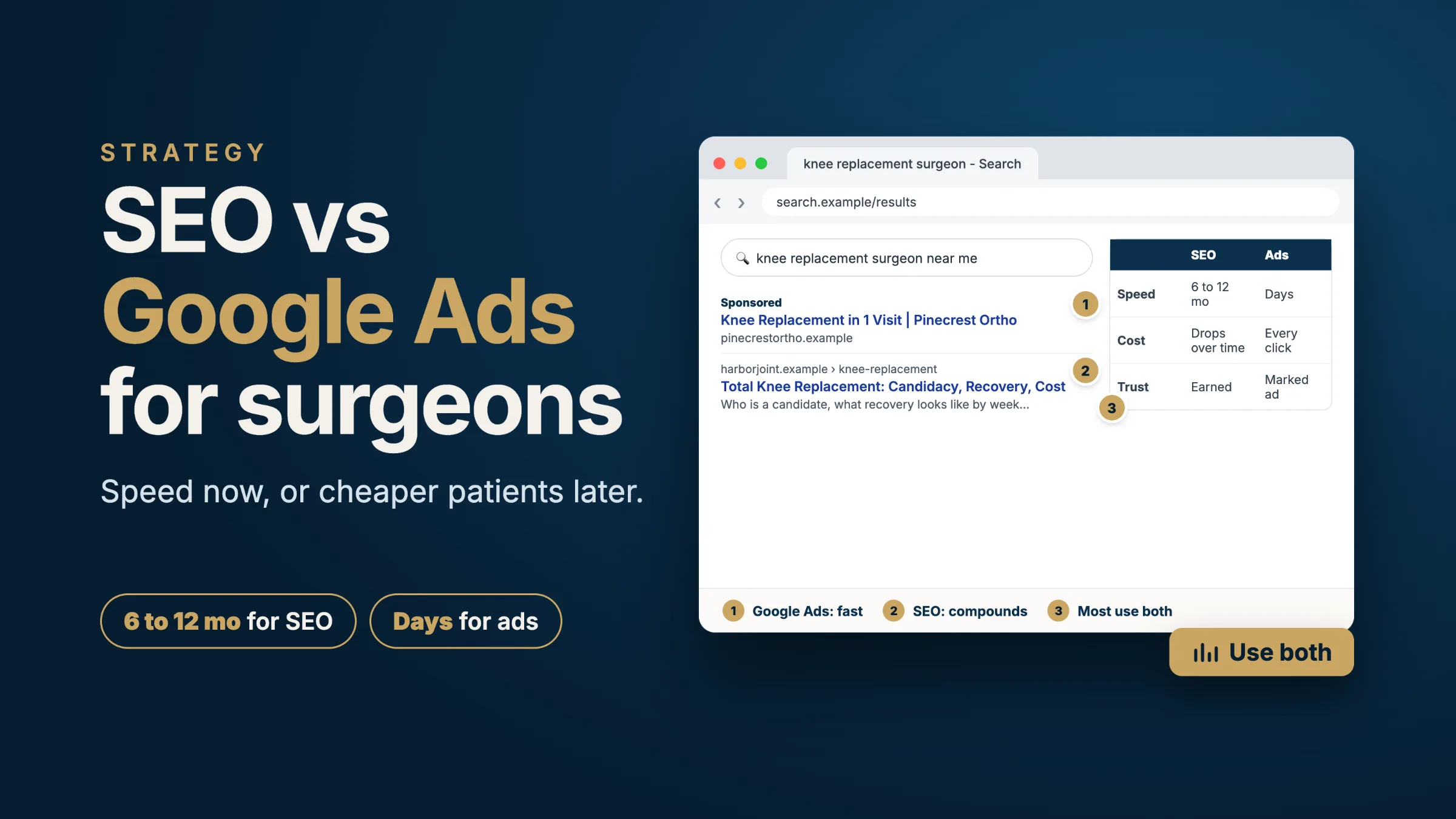
Ads bring patients fast but stop when you stop paying. SEO builds slowly, then costs less per patient. Here is when each one wins, and why most practices use both.
Get a free video audit of your website, Google profile and ads that shows where consults are slipping away. It lands in your inbox within 2 business days.
Or grab the free surgeon marketing compliance checklist.