To get more spine surgery patients, be the practice that explains the condition and the non-surgical options best, shows up for specific searches, makes second opinions easy, earns referrals from physical therapists and primary care, and replies to every inquiry fast. Spine patients take months to decide, so trust built early wins the consult.
Why is spine marketing different from other surgical marketing?
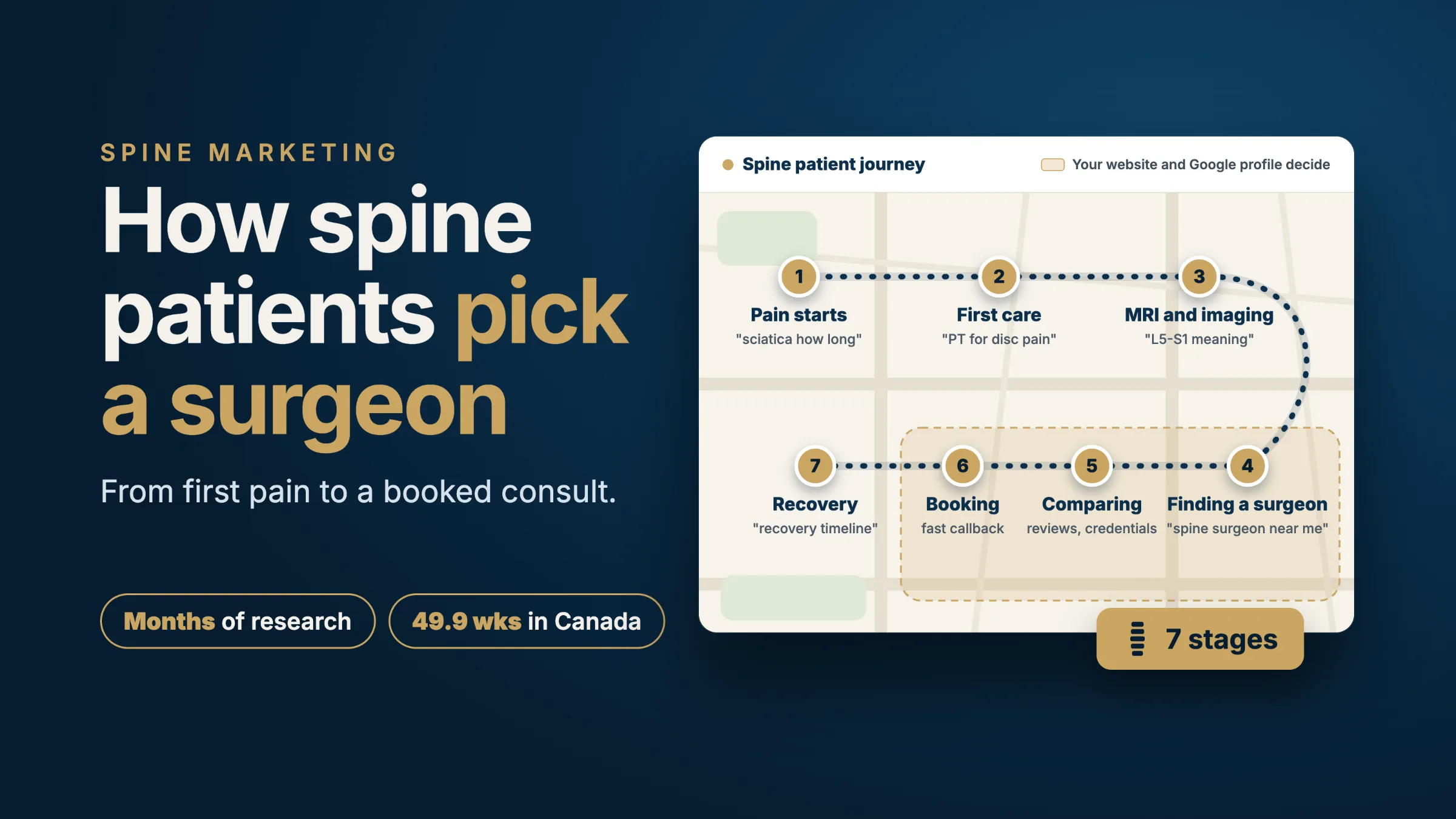
Because the patient is rarely in a hurry. Most spine patients try other care first, get imaging, compare surgeons and often ask for a second opinion before they book. If you want the full path, our spine surgery patient journey guide walks through it stage by stage.
That slow path changes the job. You are not marketing a quick decision. You are staying useful and credible over weeks or months, so that when the patient is ready, your practice is the obvious call. Our spine surgeon marketing page covers how we build that for practices.
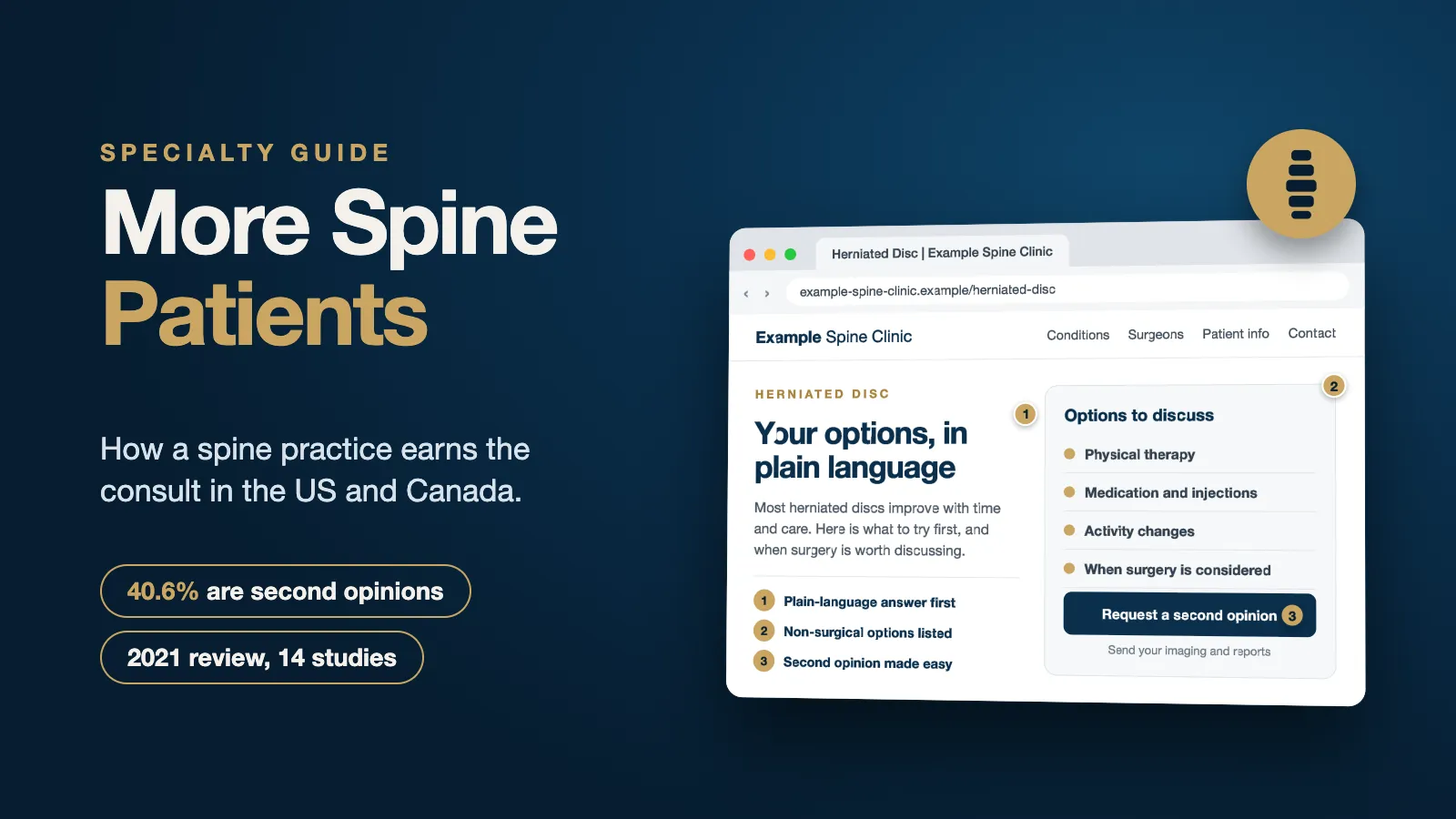
Two numbers worth knowing. A 2021 scoping review of 14 studies in Surgical Neurology International found that about 40.6% of spine consultations were second opinions, and 61.3% of those second opinions differed from the first recommendation. Of the ones that differed, 75% recommended conservative management. Source
What do spine patients look for when they choose a surgeon?
They want clear explanations, honest options and a surgeon they trust. They are not mainly comparing prices or slogans.
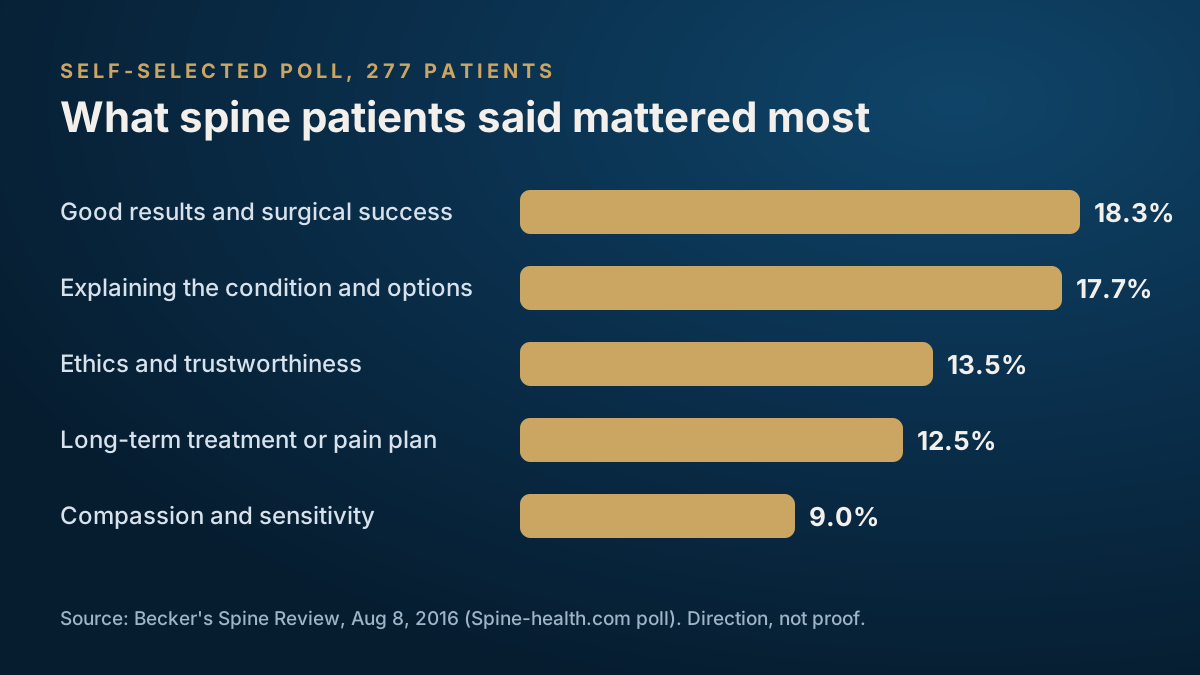
One small poll gives a useful hint. In 2016, a Becker's Spine Review guest post reported a survey of 277 patients considering spine surgery on Spine-health.com. It was a self-selected poll on a single website, so treat it as direction, not proof. Still, the ranking is telling:
| What patients said mattered | Share of respondents |
|---|---|
| Good treatment results and surgical success | 18.3% |
| Explaining the condition and options clearly | 17.7% |
| Ethics and trustworthiness | 13.5% |
| A long-term treatment or pain plan | 12.5% |
| Compassion and sensitivity | 9.0% |
Source: Becker's Spine Review, Aug 8, 2016. In that poll, a physician referral ranked low, at 4.6%.
The takeaway for your website is simple. Four of the top five factors are things a page can show: explanation, trust, a plan beyond surgery and a human tone. Results matter too, but you can only claim results you can document and that your regulator allows you to publish.
How do spine patients find a surgeon online?
They search the condition first, then the treatment, then the surgeon. Your site needs a page for each step, written in plain language.
Start with the conditions you actually treat, such as herniated disc, spinal stenosis, sciatica and scoliosis. Each page should open with a direct answer, explain symptoms and when to see a specialist, describe non-surgical options first and then surgical ones, and say who you are and where you practice. Add your location signals (city, province or state, hospital affiliations) so Google and AI assistants can place you.
Then cover the questions patients ask before they book: what a consult involves, how a second opinion works, what recovery looks like and what to bring. Those pages answer the search and shorten the consult. For more on getting found locally, see how to rank for "surgeon near me".
Write for AI answers too. Patients now ask ChatGPT, Gemini and Google AI the same questions. Pages with direct answers, clear structure and sourced facts are easier for them to quote. Google says its AI features need no special markup beyond a page that is indexed and eligible to show a snippet. Source
Should you make second opinions easy to request?
Yes. If roughly four in ten spine consultations are second opinions, a large share of your inquiries may come from patients who already heard a recommendation somewhere else.
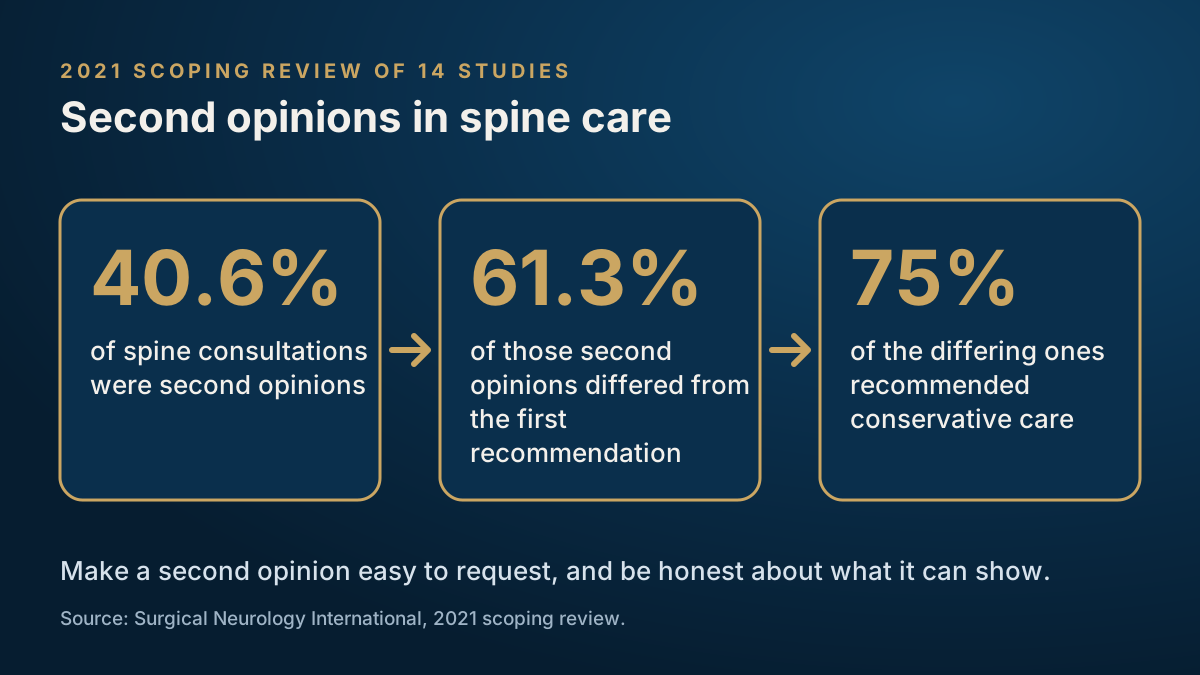
Give them a clear, low-pressure path. A short second-opinion page should say what to send (imaging, reports), what happens next, how long a reply takes and who reads the file. Be honest that a second opinion can confirm the first plan or point to a more conservative one. That honesty is the trust signal patients are looking for.
Do not promise an outcome, and do not criticize the other surgeon. Explain your reasoning and let the patient decide.
Where do spine referrals come from in the US and Canada?
From physical therapists, primary care, pain management and other specialists. The mix differs by country.
| Topic | United States | Canada |
|---|---|---|
| How patients reach a surgeon | Many can book directly, or come through PT, primary care or pain management | In most provinces a referral from a family doctor or another physician is needed first |
| Physical therapy | All 50 states and DC allow some form of direct access to PT (APTA) | Varies by province |
| Waiting | Patient choice and insurance drive timing | Fraser Institute 2025: median wait from GP referral to treatment is 28.6 weeks, and 48.6 weeks for orthopaedic surgery (Fraser Institute) |
| Rules on advertising | FTC, state medical boards, HIPAA | Provincial college rules, such as the CPSO advertising policy in Ontario |
Note that the Fraser Institute figure for orthopaedic surgery is a broad category, not spine alone.
In practice, referral work is relationship work. Visit local PT clinics and family practices, send short plain-language updates, make it easy to send a patient your way and reply quickly. Keep every referral relationship clean: the HHS OIG explains the Anti-Kickback Statute and Stark law, and paying or rewarding referrals is not a marketing tactic. Source
Do Google Ads work for spine surgery?
They can, on search terms where a patient is already looking for help. Expect limits and plan your copy and landing pages carefully.
WordStream's 2026 benchmarks for Physicians and Surgeons put median US search cost per click at $4.76 and conversion rate at 12.43%. Your numbers will differ by market and keyword, so use those as a rough yardstick, not a forecast. Source
Two rules shape the setup. Google's healthcare and medicines policy applies to your ads, and invasive medical procedures count as a sensitive interest category, so no remarketing lists, Customer Match or lookalike audiences. Source Send each ad to a page that matches the search, not your home page. Our Google Ads for surgeons service page explains how we handle this.
How do reviews and reputation affect spine patients?
Reviews build trust before the first call, but they only help if they are real and collected within the rules.
Ask every patient the same way. Do not offer incentives, and do not screen out unhappy patients before asking. Google's reviews policy bans both. The FTC's 2024 rule bans fake reviews and testimonials. Google policy and FTC rule. In Ontario, the CPSO bars patient testimonials in physician advertising, so Canadian practices should check their own college's rule before quoting any patient. See how to get more patient reviews for a safe process.
What should you track and fix first?
Fix speed of reply first, then page quality, then everything else. The cheapest gain is usually answering faster.
A Harvard Business Review study of online sales leads found that firms contacting a lead within an hour were about seven times more likely to qualify it than firms waiting longer. It is not a spine study, but the logic fits a patient who has spent months researching and sends inquiries to three practices. Source
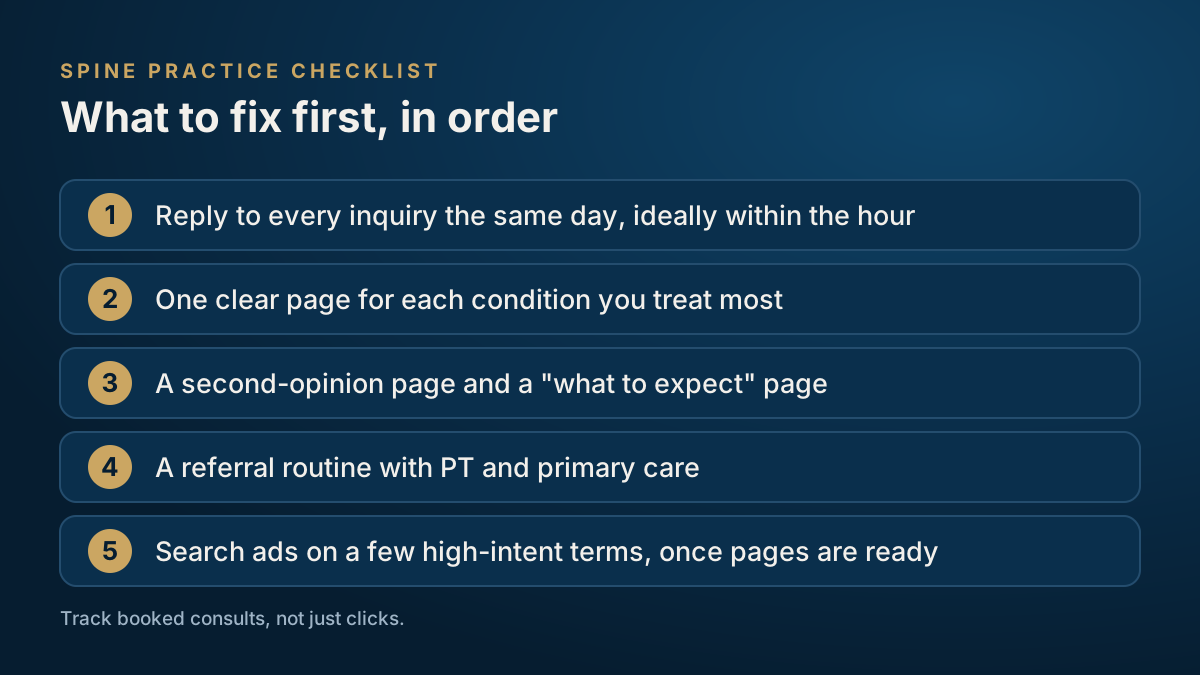
The same order in text:
- Reply to every inquiry the same day, ideally within the hour.
- Publish one clear page for each condition you treat most.
- Add a second-opinion page and a "what to expect at your consult" page.
- Set up the referral routine with PT and primary care.
- Run search ads on a few high-intent terms once the pages are ready.
Track booked consults, not just clicks. If you want an outside look at where your practice stands, request our free surgeon marketing audit.
Also protect patient data. If your site uses analytics or ad pixels on patient portals or appointment pages, get privacy advice first. HHS guidance on tracking technologies was partly vacated in 2024, but portal pages are still covered. Source General information, not legal advice.
Frequently asked questions
How do spine surgeons get more patients?
Be easy to find for specific conditions, explain non-surgical options plainly, make second opinions easy to request, build referral relationships with physical therapists and primary care, and answer every inquiry fast. Spine patients research for a long time, so the practice that earns trust early usually wins the consult.
Do spine patients need a referral?
It depends on the market. In the US many patients can book a spine consult directly, and every state allows some form of direct access to physical therapy. In most Canadian provinces a patient needs a referral from a family doctor or another physician, so referral relationships matter more.
Is Google Ads allowed for spine surgery?
Yes, with limits. Google treats invasive medical procedures as a sensitive interest category, so remarketing lists, Customer Match and lookalike audiences are off the table. Search ads on condition and surgeon terms still work and need careful, accurate copy.
Should a spine practice make second opinions easy?
Yes. A 2021 scoping review found about 40.6% of spine consultations were second opinions, so a large share of your inquiries may come from patients who already heard a recommendation elsewhere. A clear second-opinion page and a fast response turn that into consults.
How fast should a spine practice reply to an inquiry?
As fast as you can. A Harvard Business Review study of online sales leads found that contacting a lead within an hour made qualification about seven times more likely than waiting longer. Patients who spent months researching often book with whoever answers first.
The bottom line
Spine patients decide slowly, so win them with clarity. Explain the condition, show the non-surgical options, make a second opinion easy, build real referral relationships and reply fast. Then check your ads and reviews against the rules in your country. Want a second pair of eyes on your practice? Get your free audit.
General information, not legal or medical advice. Rules change, so confirm anything compliance-related with your own advisor and your state board or provincial College.