
Surgeons get more patients by combining a few channels that work together: local search, a strong website, SEO, Google Ads, online reviews, physician referrals, social media, patient follow-up, and AI search visibility. No single channel does all the work. The right mix depends on your specialty, your city, and how fast you want to grow.
This guide covers all nine, what each one does best, how fast it works, and where to start.
Want to know which channels will bring your practice the most patients? Contact us for a free practice growth audit, and we will map the right mix for your specialty and city.
How do surgeons actually get more patients?
Most new patients come from a short chain: a patient searches, finds you, trusts you, and books. Each channel below strengthens one part of that chain. Some bring patients fast, others build slowly but cost less per patient over time.
Here is the quick view before we go deeper.
| Channel | Best for | How fast it works |
|---|---|---|
| Local SEO & Google Business Profile | Near-me and map searches | Weeks to a few months |
| Website built to convert | Turning visitors into consults | Right away, once live |
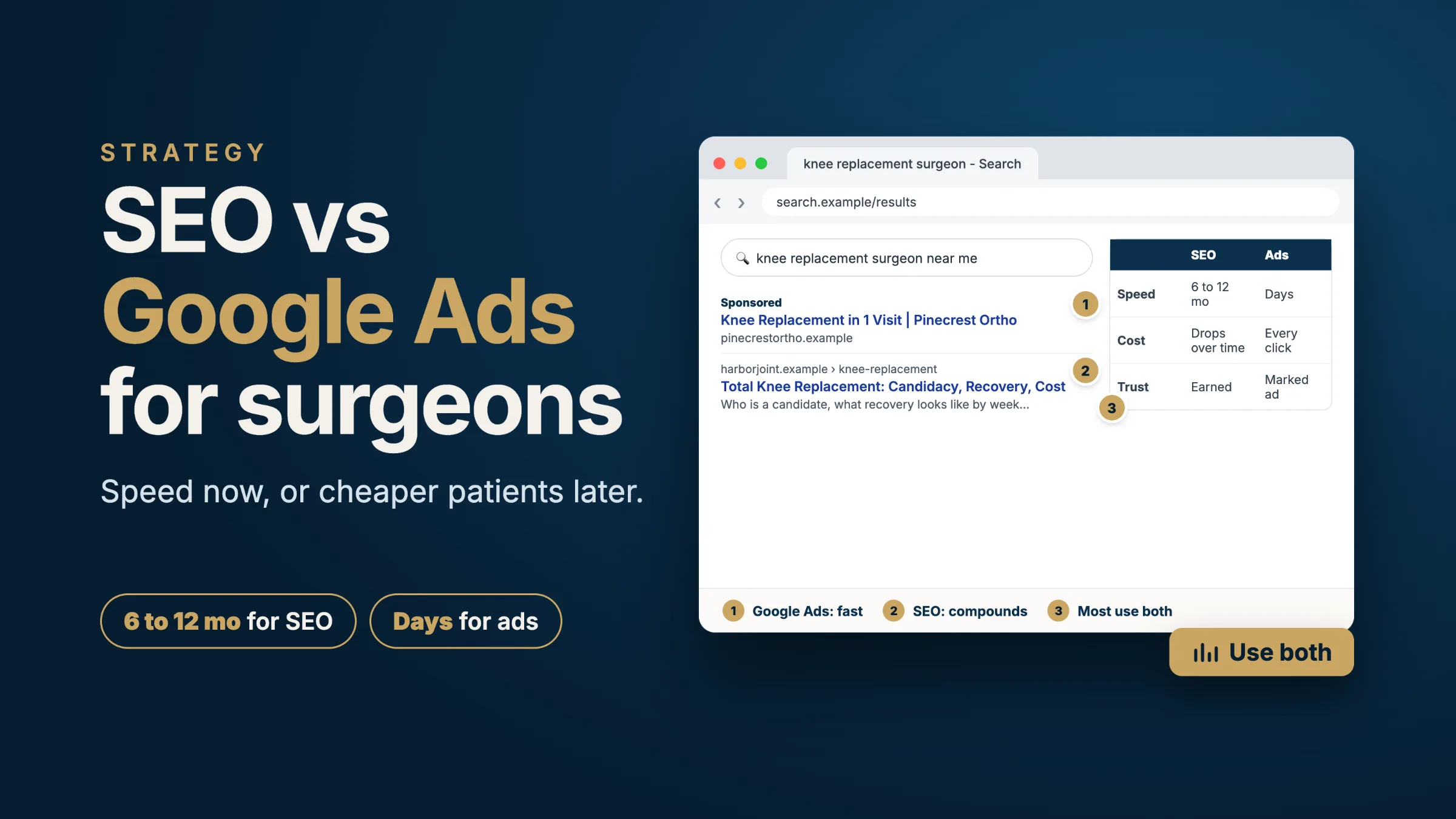
| SEO | Lower-cost patient flow long term | 6 to 12 months |
| Google Ads | Fast, high-intent inquiries | Days to weeks |
| Reviews & reputation | Winning the final choice | Ongoing |
| Referral relationships | Steady, high-quality cases | Months |
| Social media & content | Trust and familiarity | Months |
| Follow-up & nurture | Booking inquiries you already have | Right away |
| AI search visibility | Being named by ChatGPT & AI Overviews | Months |
The nine proven channels to get more surgical patients
1. Local SEO and your Google Business Profile
Most patients search with words like "knee surgeon near me" or "best LASIK in Chicago." A complete Google Business Profile, with the correct name, address, phone, hours, photos, and service details, helps you show up in the map results that sit above the regular listings. For many practices, a strong local SEO setup is the single biggest source of new calls. The work is steady rather than flashy: keep your profile current, add photos, answer questions, and collect reviews. If you have more than one office, each location needs its own profile and its own local page.
2. A website built to turn visitors into consults
Your website is where a click becomes a consult. If it loads slowly, hides your phone number, or buries the booking form, you lose patients who were ready to act. A website built to convert, with clear procedure pages, real photos, and an easy request form, often lifts bookings without spending another dollar on ads. The basics matter most: fast loading on a phone, a phone number people can tap, and a short form that does not ask for a life story. Every other channel on this list sends traffic here, so a weak website quietly lowers the return on all of them.
3. Search engine optimization (SEO)
Ranking for the procedures you perform brings patients who are already looking for them. Helpful pages that answer real questions, strong procedure pages, and a fast, mobile-friendly site all feed this. Ongoing SEO costs more to build at first, then lowers your cost per patient over time. Unlike ads, the pages you rank keep working after you stop paying, which is why established practices lean on it. A blog that answers the questions patients actually ask, like recovery times or how to prepare for surgery, also helps you show up in AI answers, which we cover below.
4. Google Ads
When you need patients this month, paid search puts you at the top for high-intent searches. You pay for each click, so the targeting has to be tight to avoid waste. Well-run paid search campaigns can fill a schedule within weeks, which makes them useful for new practices or a single procedure you want to push. The risk is spending on clicks that never book, so tracking which keywords lead to real consults is the whole game. Pair the ads with a landing page made for that one procedure, not your homepage, and the cost per patient drops.
5. Online reviews and reputation
Patients read reviews before they call, and often before they even open your website. A steady flow of recent, genuine reviews, plus quick replies to them, builds the trust that wins the final choice between you and another surgeon. A simple review and reputation system turns happy patients into your best marketing. Recency matters as much as the star rating, since a wall of five-star reviews from three years ago looks stale. The easiest fix is a short, polite request sent at the right moment, usually a few days after a successful procedure or follow-up.
Not sure where your patients are coming from, or where they are slipping away? Talk to our team and we will find the gaps.
6. Physician and referral relationships
For many surgical fields, other doctors still send the most cases. Staying easy to refer to, sending clear updates back to the referring physician, and keeping those relationships warm protects this channel. It takes months to build, but referral case flow is steady and high quality. The online channels above support it too: a referring doctor often checks your website and reviews before trusting you with their patient. So the same work that wins direct patients also makes you a safer referral.
7. Social media and educational content
Short videos, patient education, and before-and-after content, where your field allows it, keep your name in front of people who are not ready yet. This rarely books a surgery on its own. It supports every other channel and builds familiarity, so when the time comes, patients already know you. Pick one platform your patients actually use and post consistently, rather than spreading thin across five. Simple, honest content from the surgeon beats polished ads, because patients are choosing a person they will trust with their body.
8. Patient follow-up and lead nurture
Most practices already get more inquiries than they convert. Fast callbacks, simple reminders, and a clear path from first question to booked consult capture patients you have already paid to attract. Tightening your lead follow-up is often the cheapest way to grow, because the demand is already there. Speed is the main lever: a call back within five minutes books far more patients than one the next day. A few automated reminders by text or email also rescue the people who meant to book and simply forgot.
9. AI search visibility
More patients now ask ChatGPT, Gemini, and Google's AI Overviews questions like "best bariatric surgeon in Dallas." These tools pull their answers from clear, well-structured, trustworthy content. Practices that answer common questions in plain language, show real credentials, and keep their pages current are the ones these systems name. This channel is still new, which means early movers have an opening before it gets crowded. The same habits that help here also help with regular search: clear answers near the top of a page, real author credentials, and recent update dates.
A common mistake to avoid
The biggest waste is chasing channels instead of patients. Practices sign up for ads, a new website, and social media all at once, then cannot tell which one actually booked a consult. Pick a small number of channels, put proper tracking in place, and judge each one by booked patients, not clicks or followers. It is better to run three channels well than nine channels badly.
Which channels should you start with?
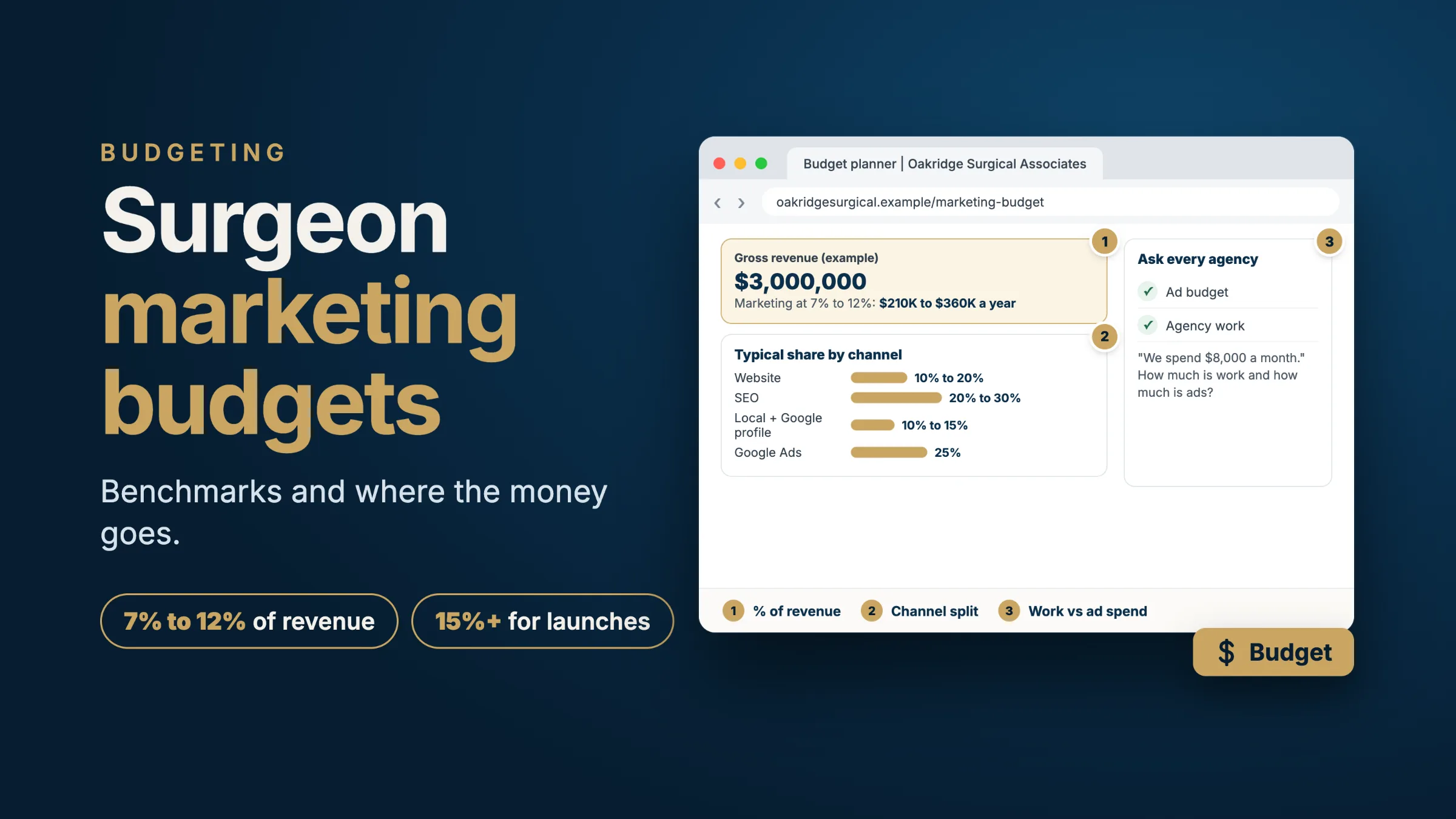
Start with the channels that match your situation, not all nine at once. A new practice usually needs Google Ads, a strong website, and a complete Google Business Profile for speed, because it has no rankings or reviews yet. An established practice gets more from SEO, reviews, and referrals, which compound over time and lower the cost of each new patient. Your specialty matters too: elective fields like plastics and LASIK depend heavily on ads and reviews, while referral-driven fields lean on relationships and search. Before you spread money across every channel, decide how much to budget for marketing and put it where your patients actually are.
- SEO
- Google Ads
- AI search visibility
- Local SEO & Google Profile
- Website built to convert
- Reviews & reputation
- Social media & content
- Referral relationships
- Website built to convert
- Follow-up & nurture
How long before these channels bring patients?
Paid ads and better follow-up can bring patients within days. Local SEO and reviews usually show results in a few weeks to a few months. SEO, referrals, and AI visibility build over 6 to 12 months, but they cost less per patient once they take hold. A healthy practice runs a few fast channels and a few slow ones at the same time.
Frequently asked questions
What is the fastest way for a surgeon to get more patients?
Google Ads and a complete Google Business Profile, paired with fast follow-up on every inquiry. These can bring booked consults within days to weeks.
How do surgeons get patients without paid ads?
Local SEO, online reviews, referral relationships, and SEO content bring patients without ongoing ad spend. They take longer to build, but cost less per patient once they work.
Do referrals still matter for surgeons?
Yes. For insurance and referral-driven fields, physician referrals are still a top source of cases, alongside online channels that patients use to check you out.
How many marketing channels should a practice use?
Most practices do well with three to five channels that fit their specialty, rather than spreading thin across all nine. Depth beats width.
Can AI search really bring surgical patients?
It is growing quickly. More patients ask ChatGPT and read Google's AI Overviews before choosing a surgeon, so being cited in those answers matters more each year.
The bottom line
There is no single channel that brings every patient. Surgeons who grow combine a few that fit their specialty and city, measure which ones book real consults, and keep improving what works. Start with two or three, get them right, then add more.
Ready to turn these channels into booked consultations? Get in touch and we will build the plan around your practice.
General information, not legal or medical advice. Rules change, so confirm anything compliance-related with your own advisor and your state board or provincial College.